
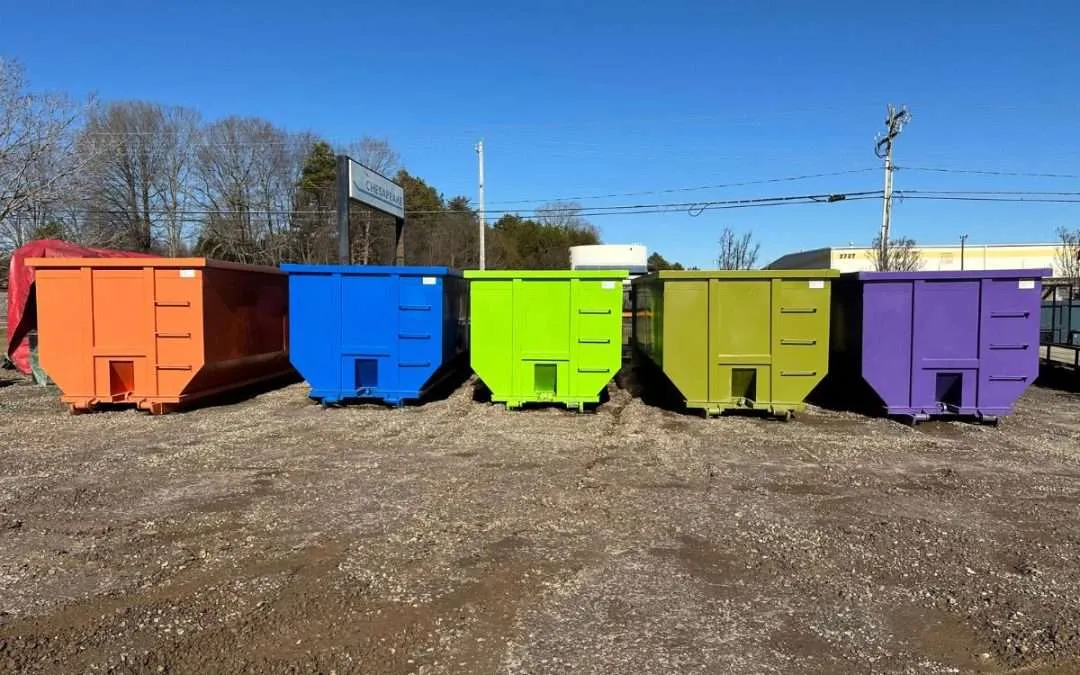
A Practical Overview for Fleet Operators and Contractors
Roll-off dumpsters are a foundational piece of equipment for waste, recycling, construction, and demolition operations. When specified correctly, they increase route efficiency, reduce downtime, and protect long-term margins. When specified poorly, they become a recurring maintenance problem.
This guide explains what a roll-off dumpster is, how it functions within modern fleets, and what matters when selecting containers for real-world, repeat-use environments.
What Is a Roll-Off Dumpster?
A roll-off dumpster is a rectangular, open-top steel container designed to be loaded, transported, and unloaded by roll-off and hooklift trucks using cable hoist or hook lift systems.
Unlike front-load or rear-load containers used for scheduled municipal pickup, roll-off containers are built for on-demand hauling, high-impact loading, and repeated transport cycles. They are commonly used in:
- Construction and demolition (C&D)
- Scrap metal and recycling operations
- Commercial cleanouts
- Municipal and industrial waste streams
- Junk hauling and rental fleets
The defining characteristics are structural strength, compatibility with truck systems, and durability under repeated abuse—not convenience or aesthetics.
How Roll-Off Dumpsters Function in the Field
Roll-off containers are loaded and unloaded using either:
- Cable hoist systems (cable pull)
- Hook lift systems (hydraulic hook and round bar)
The container rides on steel rails and rollers, allowing it to be pulled onto the truck, secured, transported, and deployed repeatedly. Rear swing doors allow walk-in loading for heavy or wheeled material. Open tops accommodate machine loading with skid steers, loaders, or excavators, while also allowing end users to easily walk up to the sides for hand-loading when the container is used as a rental.
In fleet environments, the container is not a disposable accessory. It is part of a system—truck, hoist, rails, payload limits, and route efficiency all matter.
Core Design Features That Matter
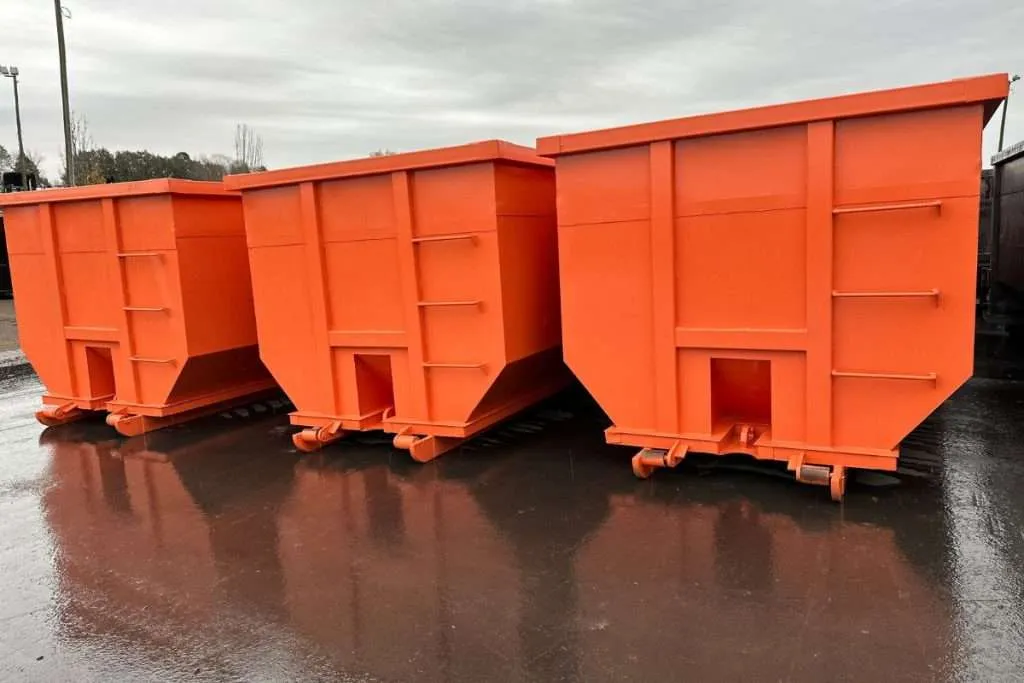
Well-built roll-off dumpsters share a few non-negotiable characteristics:
- Rectangular or tub-style geometry depending on application
- Rear swing doors for walk-in loading and controlled unloading
- Structural rail assemblies matched to truck systems
- Fully welded interiors to prevent seam failure and leaks
- Heavy-duty rollers, hinges, and latch hardware
- Steel thickness appropriate to material type and duty cycle
Containers designed for fleet use prioritize service life, not minimum upfront cost.
Common Roll-Off Dumpster Sizes
Roll-off containers are measured in cubic yards, but operators evaluate them by payload, footprint, and compatibility.
| Capacity | Typical Use Cases |
| 10 Yard | Dense material, route-based hauling, limited space sites |
| 15 Yard | Cleanouts, light C&D |
| 20 Yard | General-purpose fleet standard |
| 30 Yard | High-volume C&D, demolition |
| 40 Yard | Commercial construction, industrial waste |
Operational note: Many fleets standardize on one or two sizes to simplify logistics, training, and maintenance.
Box Style vs. Tub Style Roll-Off Containers
Box Style Containers
- Straight-sided with external reinforcement columns
- Higher resistance to impact and sidewall deformation
- Preferred for:
- Concrete
- Scrap metal
- Heavy demolition
- Longer service life in high-abuse environments
Tub Style Containers
- Tapered, nestable design
- Lower shipping cost per unit
- Easier unloading of loose or wet material
- Common for:
- General waste
- Junk hauling
- Residential and light commercial use
Fleet operators typically run both, assigning each style based on material stream and route economics.
Truck System Compatibility
Container compatibility is not optional.
Before specifying a container, confirm:
- Cable or hook lift system
- Standard 36-inch OD rails or proprietary spacing
- Hook height and round bar dimensions
- Overhang allowances under DOT regulations
Containers can be built for standard systems or custom platforms, but assumptions lead to downtime. Precision matters.
What Belongs in a Roll-Off Container (and What Doesn’t)
Roll-off containers routinely handle:
- C&D debris
- Scrap metal
- Roofing material
- General commercial waste
- Concrete, asphalt, and masonry (with appropriate build specs)
Restricted materials vary by jurisdiction and disposal facility. Operators should always align container usage with local regulations and downstream processing requirements.
Buying vs. Renting: A Fleet Perspective
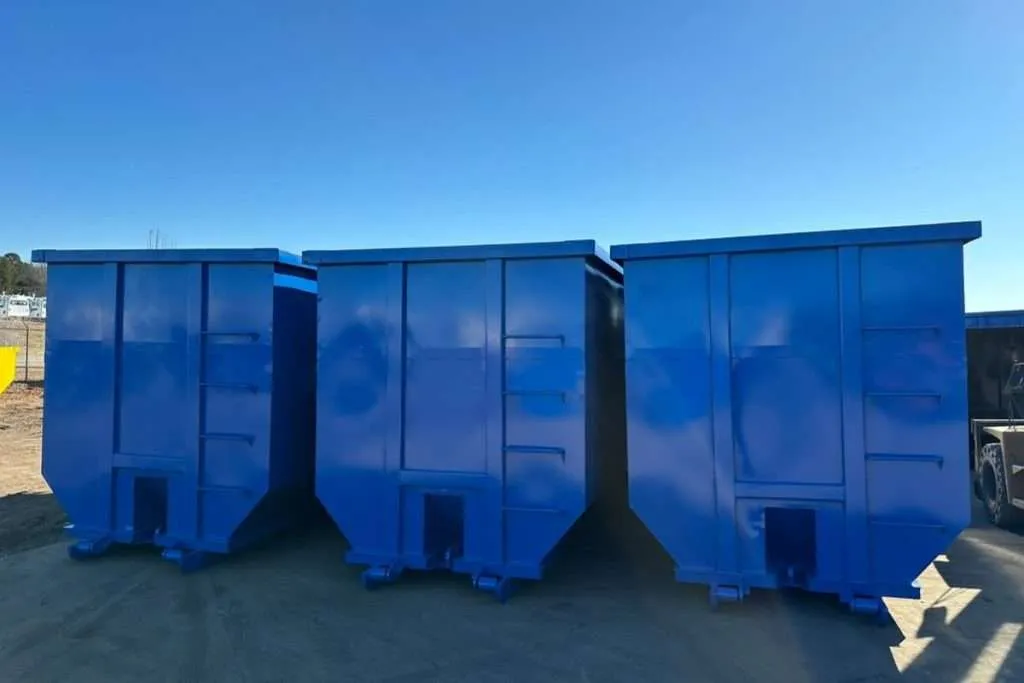
For operators running recurring routes or multiple jobs, ownership typically outperforms rental over time.
Ownership allows for:
- Standardized container specs across the fleet
- Predictable maintenance scheduling
- Branding and asset control
- Reduced long-term operating cost
- Flexibility across routes and contracts
Containers built with heavier steel, tighter crossmember spacing, and fully welded seams consistently deliver longer reinvestment cycles than light-duty alternatives.
Selecting the Right Container for Your Operation
Professional buyers evaluate containers based on:
- Duty cycle (light hauling vs. demolition)
- Material density
- Truck or trailer compatibility
- Steel thickness and structural design
- Repairability and long-term serviceability
Heavier duty builds cost more upfront but reduce downtime, repairs, and premature replacement.
Final Considerations for New Fleet Purchases
Before placing an order:
- Confirm rail spacing and hoist compatibility
- Specify steel thickness based on material type
- Decide on box vs. tub geometry
- Consider future expansion and standardization
- Work with a manufacturer that understands fleet-scale needs
Containers should be built to support your operation—not dictate its limits.
Talk With a Specialist
If you’re evaluating roll-off containers for fleet expansion, replacement cycles, or new routes, work with a manufacturer that understands production volume, compatibility, and real-world use—not just specifications on paper.
Frequently Asked Questions
1. What is the difference between an economy roll-off container and a standard or heavy-duty build?
Economy containers are designed for lighter-duty applications where maximizing legal payload on smaller trailers is the priority. Standard and heavy-duty containers use thicker steel, tighter crossmember spacing, and more robust structural components, resulting in longer service life and fewer repairs under repeated use.
2. How do I know if a roll-off container will fit my truck or trailer?
Compatibility depends on rail spacing, hook height, round bar dimensions, and whether the system is cable or hook lift. Standard rail configurations are common, but proprietary systems require exact measurements. Containers should always be specified to match the truck—not adjusted after delivery.
3. Are tub-style or box-style containers better for fleet operations?
Neither is universally better. Box-style containers are preferred for high-impact materials like concrete and scrap due to their reinforced sidewalls. Tub-style containers are often used for general waste and junk hauling because they nest for shipping and unload material more easily. Many fleets run both styles depending on the route and material stream.
4. How long should a properly built roll-off container last?
Service life depends on material type, duty cycle, and build specification. Containers constructed with heavier gauge steel, fully welded interiors, and proper structural reinforcement routinely remain in service 5–10 years longer than lighter, economy-focused builds.
5. Can roll-off containers be customized for non-standard systems or applications?
Yes. Containers can be built for non-standard rail spacing, custom hook heights, combo hook-and-cable configurations, and specialized applications such as watertight or reinforced builds. Custom fabrication requires accurate measurements and should be finalized before production begins.
6. Is it better to standardize container sizes across a fleet?
For most operations, yes. Standardizing sizes and specifications simplifies training, reduces parts inventory, improves route planning, and lowers long-term maintenance costs. Many fleets select one or two core container sizes and build around those standards.